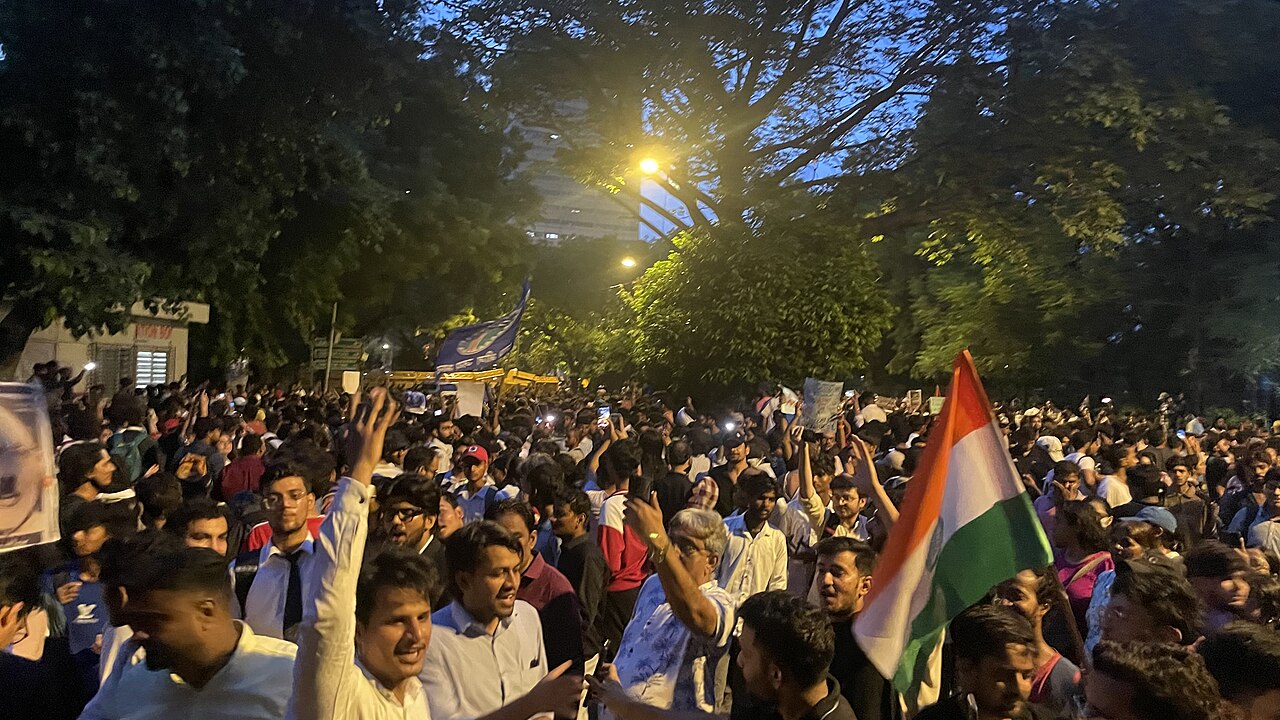
New Delhi remained tense on Sunday as the fallout continued from the Cockroach Janta Party's (CJP) "Chalo Delhi" protest a day earlier, which demanded the resignation of Chief Election Commissioner Gyanesh Kumar over alleged irregularities in the electoral rolls.
What happened
On Saturday, October 10, thousands of protesters answered the CJP's call to gather at Jantar Mantar. Delhi Police had denied permission for the gathering and turned the capital into a fortress: around 41,000 security personnel were deployed, entry and exit gates at 45 metro stations were restricted, and train services were suspended as a security measure. Police detained thousands of people across the city through the day — reports put the figure between roughly 3,000 and 7,000 — picking up protesters at railway stations, the airport, hotels and homes. Among those detained were four former chief ministers: Arvind Kejriwal, Mamata Banerjee, Pinarayi Vijayan and Manik Sarkar.
Leaders released, agitation continues
CJP leaders Abhijeet Dipke, Saurav Das and Ashutosh Ranka were produced before an Executive Magistrate at the Delhi Cantt police station on Sunday morning and subsequently released, on the condition that they maintain peace for a year. The party, however, says its agitation will continue until Kumar resigns, and has announced fresh protests in Mumbai's Shivaji Park and Lucknow.
Youth and student organisations have vowed to keep protesting until their demands — including the rollback of the Special Intensive Revision (SIR) of electoral rolls — are met.
What is confirmed and what is contested
What is confirmed: the detentions, the heavy security deployment, the leaders' release, and the resumption of normal train services and metro station access on Sunday.
What remains contested: the opposition's allegation of large-scale manipulation of the electoral rolls, which the government and the Election Commission reject. In an open letter, 124 former IAS, IFS and allied-services officers defended the ECI and the SIR process, questioning allegations of vote-rigging "without credible evidence".
International reaction and court hearing
The UN human rights office said on Saturday it was "concerned" by reports of "mass detentions" and urged the immediate release of those held. India rejected the remarks, calling them "misplaced".
The Supreme Court held a special hearing on Sunday on a petition filed by Rajya Sabha MP and senior advocate Menaka Guruswamy challenging the detentions and the transit shutdown in Delhi.
What happens next
The Congress has asked all its MPs to remain in Delhi on Monday, with the INDIA bloc planning a demonstration in the capital on October 12 and a memorandum to the Chief Justice of India over the alleged electoral irregularities. Delhi Police has registered more than 20 FIRs in connection with Saturday's protests.